

In Susan Hill’s 1982 novel The Woman in Black, the protagonist Arthur Kipps concludes his narration with petulant certainty: “They asked for my story. I have told it. Enough.” With this film adaptation (an exercise in hair-raising horror, in contrast to the book’s chill grandeur and the play’s postmodern whimsy), director James Watkins clearly feels there is more to say and, though he often says it with style, it’s a film that sometimes lacks guts. As its daring do-gooder, it features boy wonder Daniel Radcliffe, now a man and here a father who, in his continued battle against evil, is hardly distancing himself from the intrepid (or should that be accursed?) Potter.
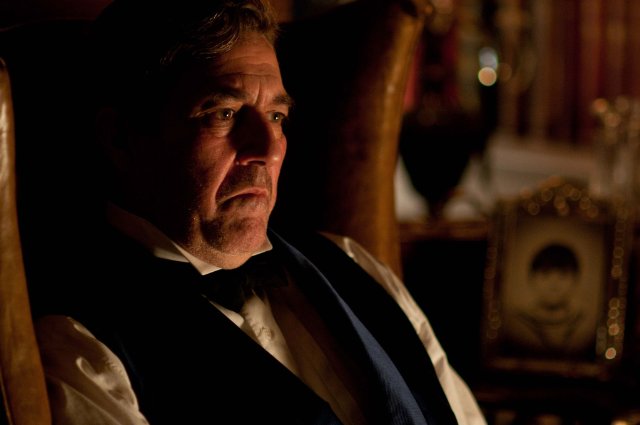
Radcliffe plays Kipps, a young lawyer and widower with a three-year-old son, sent by his employer Mr Bentley (Roger Allam) to put in order the legal affairs of the recently deceased Alice Drablow, of Eel Marsh House, Crythin Gifford. During his train journey Arthur is fortunate enough to encounter a local, the prosperous and genial Mr Daily (Ciarán Hinds, pictured below right). However, once he arrives in the village the other residents seem wary and reluctant to assist him. Matters worsen when, undeterred by vigorous warnings, he insists on heading to the isolated Drablow estate where he finds himself terrorised by the spectre of a wronged woman, Jennet Humfrye (Liz White from TV’s Life on Mars, only ever fleetingly glimpsed [pictured on page 2]). She’s the diabolical dame of the title, taken up a notch in nastiness for the sake of the screen.
Watkins’s The Woman in Black takes bold strides away from the book, so we’re in the dark at every turn. Gone are the Christmas-set prologue and the funeral which originally marked the first appearance of the woman. There’s a macabre new opener (with shades of Antichrist), making horribly explicit the suffering that has been inflicted on the village. Screenwriter Jane Goldman (Kick-Ass, X-Men: First Class) both strips the original story and fleshes it out. To The Woman in Black, Goldman adds visions of a woman in white; we see Arthur’s wife die in childbirth and, three years later, he’s still haunted by her benevolent spirit. To have Arthur grieving from the outset is a sound structural change but it’s one which provides an excuse to introduce sometimes unwelcome sentimentality. A positive consequence of the changes is that our hero is placed in increased danger as, unlike in the novel (in which an older Kipps casts his mind back to his earlier adventure), we cannot be certain of his survival.
 It’s a production from the recently resurrected Hammer Films, and honours that studio’s legacy with its occasional flamboyance (most notably Janet McTeer’s, let’s say, “spirited” performance as Mrs Daily and the addition of a gang of ghoulish children). Director James Watkins proved himself a sure hand at scares with the startling and more earthily unpleasant “hoodie” horror Eden Lake, as well as with his screenplay for My Little Eye (and to a lesser extent as one of the writers behind The Descent: Part 2). Under his stewardship The Woman in Black certainly looks the part, is at least sporadically frightening and never less than entertaining. The sequences set in Eel Marsh House are the best stuff here by a country mile; it’s there that Watkins really cranks up the tension and delivers the occasional impeccably timed fright (which I will refrain from describing lest I ruin the impact).
However, in what is presumably an effort to tap into the Harry Potter market, it arrives with a 12A rating and its claws somewhat clipped. The original version shown to the press a month ago has since been edited to apparently “reduce moments of strong violence/horror” in order to achieve the potentially more lucrative classification (it was initially offered a 15 by the BBFC). As well as losing six seconds, the final theatrical version has had its sound reduced in places and some shots have apparently been darkened. It may not sound like much but these cuts by definition are significant and it’s now noticeably less frightening. By rendering something like this theoretically suitable for young children, it risks not scaring or satisfying adults. It’s all the more surprising and disappointing considering the studio and director’s history with adult horror. As such, the casting of Daniel Radcliffe may have been its curse.
 Speaking of Radcliffe, how does he fare in his first lead role since Potter? Well, considering he’s spent the past decade fending off dark forces, he’s got both imperilled and plucky down pat. What he fails to do, however, is give Kipps psychological depth or charisma, even when he’s at his most heroic (the role is crying out for a Ben Whishaw or an Andrew Garfield); so, being generous, let’s say it’s a middling performance.
This screen adaptation of The Woman in Black is for many (including this critic) most welcome, nay overdue, and it arrives with the effusive approval of the original author Susan Hill. Also in the plus column are that it’s a properly cinematic reimagining, and is as scary as the rating will now allow (which, in fairness, means it’s on occasion pretty scary). It might not be high art but could certainly play its part in an enjoyable night out. However, a few less punches pulled and a lead of substance may have made it something to really scream about.
Watch the trailer for The Woman in Black











Add comment