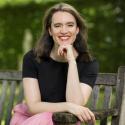
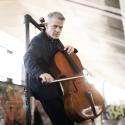
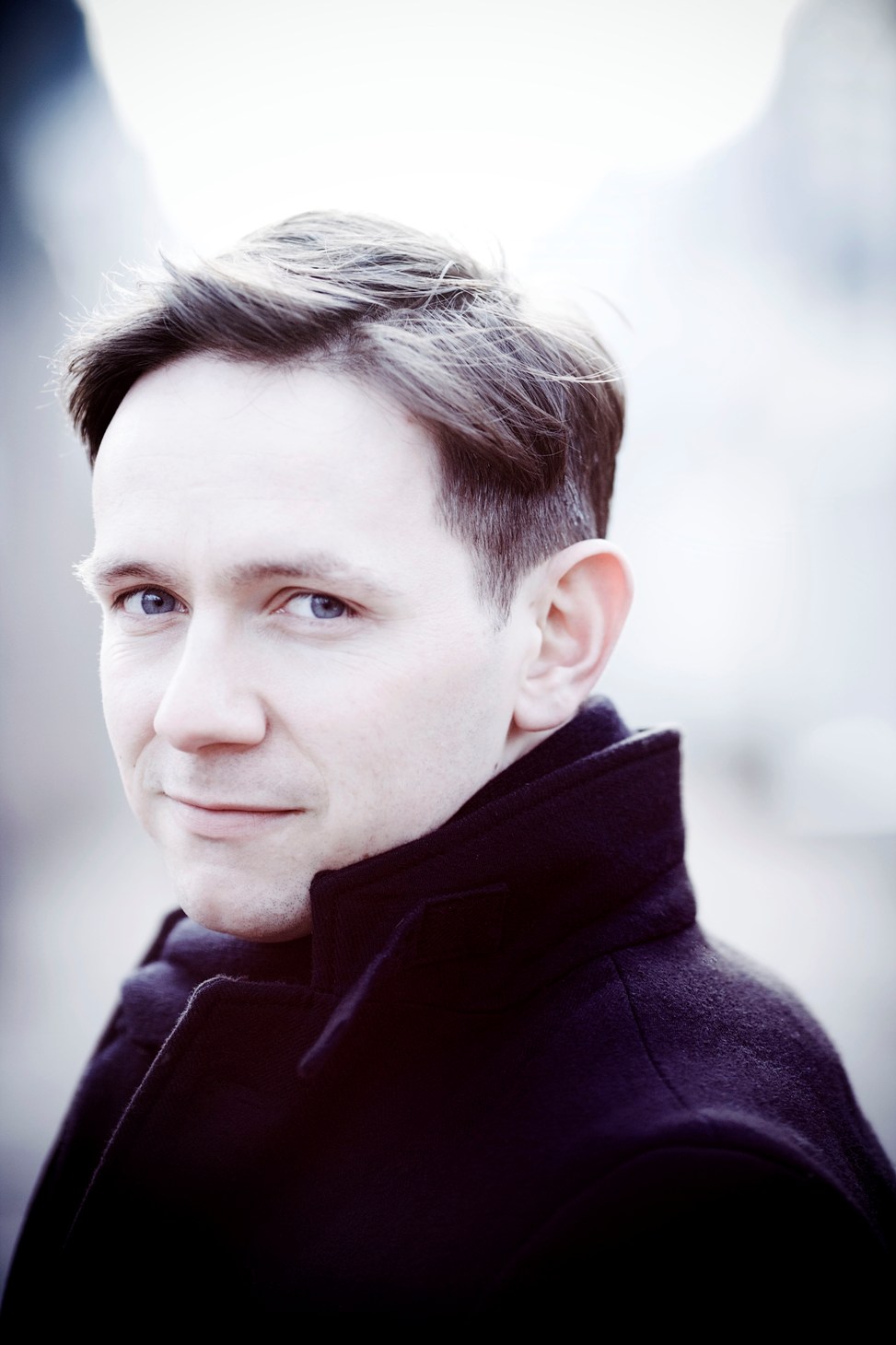
Messiahs of all kinds multiply at this time of year: the meek and the threadbare as well as the proud and polished. On the Sunday before Christmas, it was hard to choose between two potential archangels who could hardly fail given their respective pedigrees. It may have initially come down to a choice between single star soloists, soprano of the year Sophie Bevan at the Wigmore or flawless countertenor Iestyn Davies (pictured below by Marco Borggreve) at St John’s. As it turned out the entire team at Smith Square, crowning a week of top-quality choral concerts which had included Bach's Christmas Oratorio the previous evening, took up Handel’s dramatic challenge on every level.
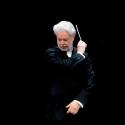
Vital to its success was a choir which could well add “perfect” to its name, the polyphony in this case remaining expressive in every voice-part even when the spotlight has passed from one to another. The agility at conductor Stephen Layton’s faster but never rushed speeds in “For unto us”, “His yoke is easy” and “All we like sheep” could be taken for granted; more surprising given the English choral tradition's usual limits were the operatic stops pulled out in the passion sequence, the sudden blazes on words like “wonderful” and “surely”, the extreme dynamic contrasts in Handel’s wondrously original “Since by man came death”.
 Layton oversaw the continuity in the dramatic contrasts between light and dark, many of them wrought by links between the choruses and the bass airs, where Matthew Brook produced long phrases which always made expressive sense. We marvelled at Handel’s introduction of the angel-thrumming skies, soprano Katherine Watson a light, high trumpet to introduce her bigger brothers from the Orchestra of the Age of Enlightenment, the superlative David Blackadder and Phillip Bainbridge, ringing down from the gallery.
There were further complementary styles exchanged between Neal Davies’s poised, spacious “He was despised”, ornamented with impeccable taste, and risk-taking tenor James Gilchrist’s urgent sequence at what became the dark heart of Part Two. What a shame, though, to be deprived of what would have been their meeting in "O death, where is thy sting?"
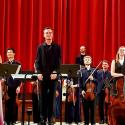
Layton drew plenty of lively nuance and rhythmic spirit from the OAE, inscaping the orchestral drama from the opening Symphony onward, and not afraid to open up the grandeur at the peak of a dancing “Hallelujah”. And to cap the lyric choral and string beauties of the concluding Amen, it was a final treat to have organist Stephen Farr move from the platform to the grander instrument at the back of St John’s. Now there’s one thing, for a start, that the Wigmore couldn’t have matched.