

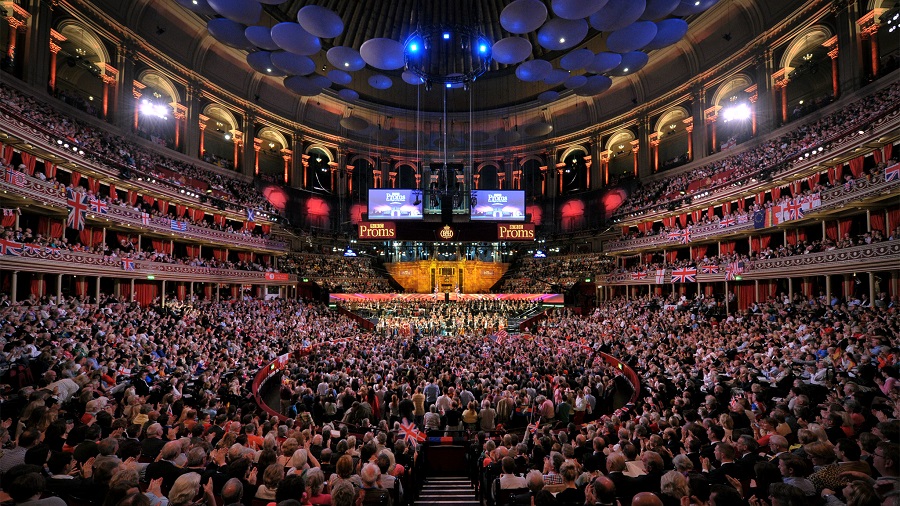
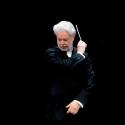
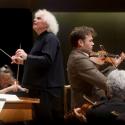
As it came to pass, Marin Alsop’s nationality was rather more of a factor than her gender on this historic Last Night of the Proms – but her deft put-down of remarks made only the week before (pace Petrenko) suggested that it might take a little more time (it’s only 2013, for heaven’s sake) for that glass ceiling truly to come crashing down and for her and others like her to be regarded as simply “conductors”.
As she said in her speech, the really shocking fact is that these issues should still be making headlines at all. This lady’s not for turning or burning. After the interval, the traditional festooning of her podium in streamers and the like included an L-Plate – but really she had more than passed the test by then; this was one of the slickest Last Nights in recent memory with music and mayhem, virtuosity and fun, held in reasonably stable equilibrium. And where else would the Chorus of the Hebrew Slaves (viva Verdi) rub shoulders with “Over the Rainbow” (forever Garland)?
Anna Clyne had the Last Night BBC Commission and her Masquerade gave the nod to Hyde Park in paying homage to Pleasure Garden Proms of yore with a wholeheartedly tonal and swaggeringly orchestrated opener – a kind of roll-up, roll-up, you-ain’t-heard-nothing-yet crowd-pleaser which might best be described as doing a Percy Grainger (and that’s some compliment) on an English country dance tune. Wagner Mastersingers then processed into the proceedings – one last burst of bicentennial indulgence (who will ever forget that Ring?) which Alsop and the BBC Symphony Orchestra ripely despatched with fluency and songfulness.
 Then the Americana arrived in earnest with Alsop reasserting her credentials as a Leonard Bernstein protégée (and groupie) with his joyous re-affirmation of tonality (after a testing sabbatical dabbling in the fashionable avant-garde of the 1960s): Chichester Psalms. A “joyful noise” was made by all with the BBC Symphony Chorus whooping it up in playful competition with their percussion-led orchestral colleagues. Bernstein’s ingenious setting of Psalm 23 brought counter-tenor Iestyn Davies rather than a boy treble to the solo spot – and his artlessness with the ravishing opening melody was complemented by a phrasal shape and musical elegance that few boys can achieve.
Another great Bernstein tune ensues in the final setting and Alsop and her forces laid that down most atmospherically, the expectant hush before its arrival a little conductorial touch of something special. But there was even better to come from the master tunesmith (all deference to Richard Rodgers) as Alsop later unveiled the ubiquitous Overture and “the best of all possible tunes” in the final number from Bernstein’s most bountiful score, Candide – “Make Our Garden Grow”. That certainly matched the aspirations of the occasion.
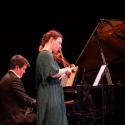
 It was a rare treat to have Nigel Kennedy, hot-foot from the Park, return to his roots (as he did with the Elgar concerto several years ago) and remind us of his indisputable artistry with something home-grown. Vaughan Williams‘ The Lark Ascending was always a great piece for him, its chirruping songfulness so freely communicated with endearing portamento harkening back to an era of English gentility that his grungy attire so wilfully belied. The earthy central section brought with it a foot-stamping authenticity before the lark’s song slowly and hauntingly evaporated into the ether. The truthfulness of Kennedy’s intonation was piercing in these final moments and for once one was was grateful for the immensity of the Albert Hall acoustic with those last notes seeming to resonate long after he stopped playing. For a Last Night, the hush was intense.
 Of course, Nige returned for a bit of sport with that old chestnut – Monty’s Csárdás. This time he donned a football shirt and a mug of something – not tea, I shouldn’t wonder – and making a meal of all things hongrois he threw in some improvisatory quotations (yep, Four Seasons was there) and no end of camp rubato culminating in he and Stephen Bryant, the BBC Symphony leader, exchanging harmonics and air kisses and a feeling that this could go on all night.
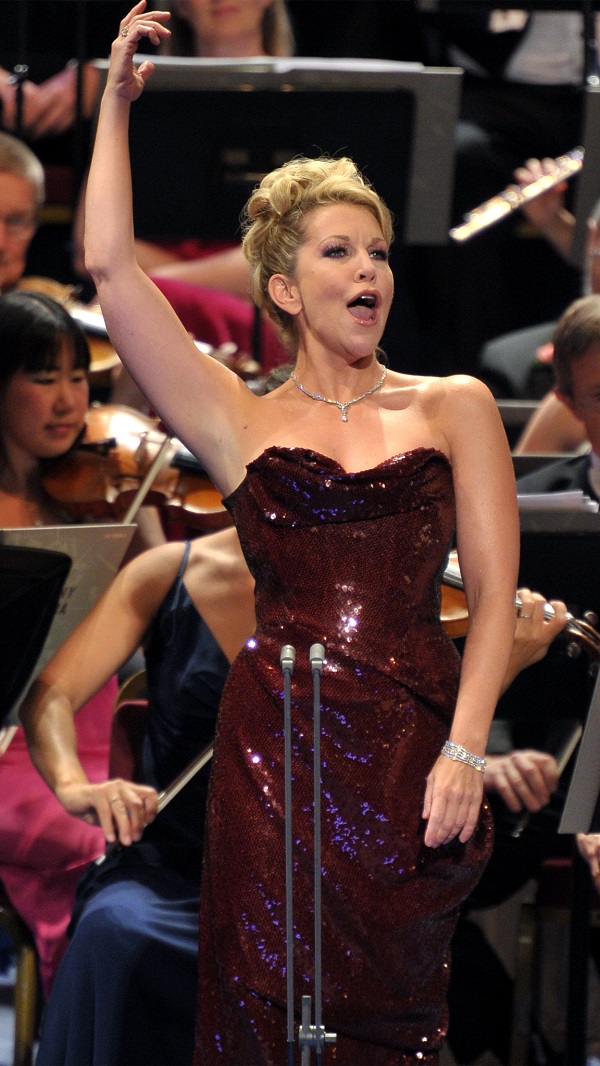
The evening’s other big star – the irrepressible Joyce DiDonato – swept into her first aria from Massenet’s Chérubin with the words, loosely translated, “I am besotted! I am drunk!” And she was. This is a lady who rises to an occasion and having lulled us into submission with the rolling mezzo tones of Handel’s "Ombra mai fù", DiDonato pulled out all the stops and more with “Tanti affetti in tal momento” from Rossini’s La donna del lago. The words here read: “Let my silence be eloquent”. As if. Out came the frolicsome trills, the devilish roulades, the completely dazzling runs from top to bottom of the vocal compass – all despatched with a playfulness and knowingness that made it all look so easy. Her Arlen and Rodgers were less idiomatic but, hey, the frocks lent their own touch of showbiz style.
And speaking of fashion, my vote goes to the gentleman of the BBC Symphony Chorus and his custom-made, Union flag, Sikh’s turban (see gallery overleaf). Now that’s what I call the spirit of Britannia.
- Listen to this concert for the next six days on the BBC Radio 3 iPlayer
- Watch the Last Night of the Proms on the BBC iPlayer
- Read theartsdesk's coverage of the Proms
- This review also appears on Edward Seckerson's website
Overleaf: a gallery of images from the Last Nights of the Proms
Click on the images to enlarge



Add comment