Where is the real Elgar to be found – in his boisterous self-portrait at the end of the Enigma Variations, the warm, feminine sentiment of the Violin Concerto and the First Symphony’s Adagio, or the nightmares of the Second Symphony? No doubt in each of them, and more. John Bridcut’s painfully sensitive documentary hones in on the private, introspective Elgar, the dark knight of "ghosts and shadows", always with the music to the fore. And by getting the good and great, young and old of the musical world not just to talk but to react to the works as they hear them, he may have broken new ground.
Elgar's disappearance from the £20 note was cause for one of our more dubious musical doyens to berate "Elgar’s antediluvian Little Englishness" - a reminder to those of us who find in his music what Sir Colin Davis here calls the ambiguity of great art that Elgar is still an easy target when it comes to pigeonholing.
Once past a busy opening sequence with music that hardly anyone will recognise (the ballet music The Sanguine Fan), Bridcut wastes little time in going to the heart of his argument - though he starts, paradoxically, with one of those sitting ducks, the Pomp and Circumstance March No 1. There's springy David Owen Norris to demonstrate at the piano how the real Elgar reveals himself in the tune that was only later to become "Land of Hope and Glory". Good Lord: drooping sixths, chromatic restlessness, contrapuntal complexity - when did we last get all this fearlessly explained in a telly documentary?
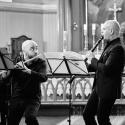
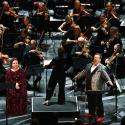
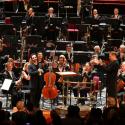
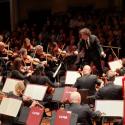
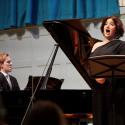
But I hope it works for everyone. I think it should, because in effect the musical sequences, though they often have people talking over them, are explained as we go through them. And the candidates are so obviously sincere, looking extremely soulful as they listen attentively and/or give magnificent interpretations, from young Edward Gardner with the BBC Symphony Orchestra, James Burton of Oxford's Schola Cantorum and the vivacious Natalia Luis-Bassa, wowing folk in Venezuela when she conducted the Simón Bolívar Youth Orchestra in the Second Symphony, to Sir Colin, Sir Mark Elder and Vladimir Ashkenazy. The cue here perhaps comes from a telling and surprising sound clip in which Ralph Vaughan Williams takes us through the opening of Elgar's First Symphony, explaining how it "looks all wrong" on paper but "sounds all right... a mystery and a miracle".
Bridcut wisely goes not for chronological biography, but for theme. We move swiftly but not sketchily from Elgar's iconic infancy and his sense of privacy to his various approaches to religion. Did you know that mention of the Blessed Virgin Mary had to be omitted from all Worcester performances of The Dream of Gerontius? How many Elgar biopics would home in on the Jewish shofar as it so resplendently sounds in the sunrise music of The Apostles? Had you thought much about Elgar's very detailed portrait of Judas in that work as a reflection of his own doubt and his frequent suicidal thoughts? I hadn't.
But there I jump ahead. Before this we get witty montages on Elgar's camera-vanity and his moustache and, more seriously longterm contrasts between Elgar's plain, maternal wife with his other Alice - Stuart-Wortley, the "Windflower" of the Violin Concerto and the Second Symphony. I've always been a bit sceptical about ASW as love interest, thinking of her more as muse perhaps, but the way Bridcut presents their correspondence and interlaces it with far from fey footage of anemones being pressed in books, as Elgar did, made me think again. As I think we now all will about the last great love-flowering of the 74-year-old composer for thirtysomething violinist Vera Hockman.
This is because Bridcut pulls out his trump card, a previously unseen "love letter" from Hockman to the composer four months after his death, which leaves us in no doubt how deep their bond was. Well, says Elgar biographer and true gent Michael Kennedy, "we'll all have to rewrite our biographies now". Adjust them, certainly.
What the composer's supposed eye for the ladies doesn't divulge is the physical side: there's no hint, for instance, of the sexual passion Janáček felt in old age for the younger, married Kamila Stösslová. And I can't quite set aside two flimsy pieces of evidence pointing to a quite different end: an old lady in Herefordshire gossiping that "Sir Edward always had an eye for the young men," and the fact that Elgar quoted a theme he'd written for his homosexual friend Frank Schuster in The Music Makers at the words "wrought flame in another man's heart". Well, romantic friendships with other men were certainly central to Elgar - Rodewald and A J "Nimrod" Jaeger, as a young scholar discreetly hints, also included - and so that, too could mean nothing in sexual terms. Still, I don't see why reactionary Elgarians should cry horror at the very suggestion.
That's not to rebuke Bridcut for not including these more tenuous possibilities in his documentary. The complex, many-sided composer is present at every turn he chooses to take. The filming of the concert sequences is haunting, and there's even a wry little tribute to the horseman on the Malvern Hills as seen in Ken Russell's temperate but perhaps slightly overrated old Monitor film. As I've suggested, the choices of music are surprising.
Bridcut has also caught his interviewees at their most wistful; perhaps the most moving of all the scenes in which the musicians listen to the music is the one when Elder, clearly hearing for the first time the spooky choral partsong "Owls" with its nihilistic "nothings" magically delivered by Schola Cantorum, says, "I can't believe the music's by Elgar." The more we hear, the more many of us feel exactly the same - and Bridcut sympathetically implies that he's among that number.
Watch the trailer for Elgar: The Man Behind the Mask:
- Watch Elgar: The Man Behind the Mask again on BBC iPlayer
- Find John Bridcut's two books about Benjamin Britten on Amazon
- Find David Nice's short Elgar biography on Amazon