Despite the best attempts of Stephen Johnson’s programme notes to create synthesis from last night’s London Philharmonic Orchestra concert, there was something rather smash and grab about the programming. It was as though Jurowski, suddenly inspired to play classical Supermarket Sweep, had emerged with a disparate trolley-load of Zemlinsky, Mozart and Szymanowski – oh, and the Brahms Violin Concerto. With a full crowd lured by big-name soloist Joshua Bell, the question was not only what the LPO would make of this disparate collections of curiosities, but also the audience.
The Brahms concerto – the evening’s headline act – was, however, much the most uneven performance of the night, and despite the obligatory cheers and endless bows I was left impressed, but emotionally rather underwhelmed. In Bell’s interpretation it is the Adagio that sets the keynote of the concerto. Although ardent, showcasing Bell’s sweetest tone, this middle movement had a determined intimacy about it; passions were turned inwards, and even in the opening dialogue with the oboe Bell seemed reluctant to reach out. Physical gestures were big, but the sound rarely matched them, and it was only with Bell absent from the texture that Jurowski’s orchestra were able to swell to full force and momentum.
Zemlinsky’s work tends to bombast, leaving one mourning the composer as Hollywood’s greatest loss
The opening Allegro felt as though it already had the Adagio in its sights, negotiating its way stylishly yet always carefully forwards. Pacing was fine, but temperament seemed more at issue. We were never in any danger of being swept off our feet by the sedate waltz theme, and despite Bell’s ubiquitous portamenti and vibrato I didn’t quite believe the tale of Sturm und Drang he spun from the forte theme.
This was Brahms played for spontaneity, for in-the-moment directness, and what it gained in personality (Bell’s own first-movement cadenza is a thing of folksy charm, whimsical little glimpses of the waltz theme caught through a gauzy curtain of harmonics) it lacked in stature and scope. Nowhere was this plainer than in the concerto’s closing three chords; Jurowski drew impressive emphasis from the LPO, but this only served to emphasise the disjunction between these and the tone of the concerto as a whole. Like vast wrought-iron gates at a country cottage the two simply didn’t belong together.
Despite not being the theatrical curtain-raiser critics have named it, Mozart’s miniature Symphony No 32 in G major did a very good job of opening proceedings. Textures here must match the telescoped developmental structure for clarity, and Jurowski’s none-too-chamber band of musicians managed exactly this, firing off the initial scalic theme with the precision of a gun-salute, before segueing directly into the lingering suspensions of the Andante.
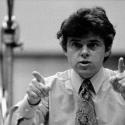
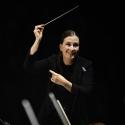
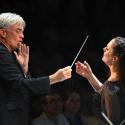
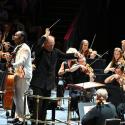
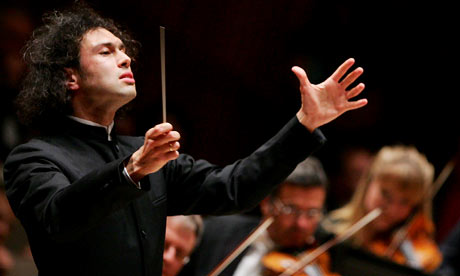 What relation this opener had to the Orientalist fantasy of Szymanowski’s Symphony No 3 (I’m not quite convinced by the symphony-in-one-movement argument) or the choral tone-poem that is Zemlinsky’s Psalm 23 I’m not sure, but this post-interval set definitely seemed to be the business end of the concert. The London Philharmonic Choir (particularly the upper voices) made a persuasive case for the more bucolic episodes of the latter work, sitting smoothly on the rather self-consciously verdant pastures summoned by Jurowski’s (pictured above) woodwind and harps. Unfortunately Zemlinsky’s passion rather overtakes him, and the work tends to bombast, leaving one mourning the composer as Hollywood’s greatest loss.
The Szymanowski is an altogether more substantial work, if only in volume. Celesta, piano, harps and organ join an already overgrown orchestra, as well as tenor soloist. Unfortunately such weight of forces in the Royal Festival Hall (now a Proms performance would be well worth hearing) often resulted in a gilded Eastern cacophony, through which soloist Jeremy Ovenden struggled to project. Despite this, and Ovenden’s rather tight account of Rumi’s sensuous poetry, the work’s delight in its own textures is intoxicating, especially when balanced by Jurowski’s precise ear.
A musical sampler rather than a conventional concert, this cabinet of musical curiosities from Jurowski and the LPO was not without its moments of treasure. That these were found in unexpected places – characterful Mozart, unabashed Orientalist excess – perhaps speaks to the dialogic energy Jurowski created by jumbling them all in together. By accident or intelligent design, last night the LPO gave their audience plenty to ponder.