

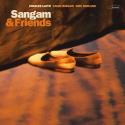
It’s always a pleasure to meet again with Charles Lloyd, whose sweet and expressive tone first enchanted me as a teenager in 1963, when he graced the Chico Hamilton Quartet, along with the guitarist Gabor Szabo – notably on the classic album Passin’ Thru Lloyd’s – affinity with Eastern spirituality which he demonstrates in his latest release, a homage to the sadly missed Indian percussion master Zakir Hussain, was always evident, long before his first visit to India in 2009, when most of the tracks on this album were recorded.
Lloyd had first heard Indian music in 1957 – Ravi Shankar and Hussain’s father the great table master Alla Rakha – and it’s surprising that he didn’t travel to the source until four decades later. But as any spiritual master will tell you, the source is within, so that there is a sense in which this extraordinary kinship was fated – the blues boy from Memphis, who played with Bobby “Blue” Bland and Howlin’ Wolf , who found his way to the East within, not without the complicity of many avant-garde jazz improvisers, who felt the same call.
All of this shines through on the tracks he made in Mumbai at the time of his trip to India in 2009 – with the trio Sangam, that included Zakir and percussionist Eric Harland, and a group of handpicked forward-looking traditionalists , including bansuri-player Rakesh Chaurasia, South Indian playback singer Vijay Prakash and Sabir Khan on the bowed sarangi. It was a mind-blowing experience, to have been suddenly transported to the land and culture that had engendered the music and spirit that had so inspired him. Ironically, the tracks for which he is alone with his own trio members, a well-rehearsed synchrony, work better than those which feature a modally-drawn collective sound in which the local players interact with each other and with the American visitors: it’s a little halting, and feels as if it might have benefitted from more hours of getting the feel of each other’s souls.
The stars of the show remain Lloyd and Hussain, and the synergy brings out the best in both: Zakir with mind-shattering intricacy as ever on his table, and the saxophonist – surely one of the very best of his generation, just a little younger than pioneers John Coltrane, Ornette Coleman and Eric Dolphy – launching into a musical discourse that is perfectly expressed with the ever-yearning, blues and gospel-inflected quality of his tone.









Add comment