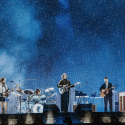
Sam Sweeney’s Fiddle: Made In The Great War is the first solo project from one of the vibrant British folk scene’s most exciting players. Sam Sweeney made his name in Bellowhead, as a duo with Hannah James, in The Full English, in Jon Boden’s Remnant Kings, and Fay Hield’s band, and in Kerfuffle, alongside other regular and irregular groupings.
It’s his fiddle that’s the real star of a thoughtful, moving and intimate account of its maker, its making, and its afterlife. Made but not assembled by one Richard Howard in 1915, a young working-class man from Leeds who made his own instruments and played the city’s music halls before being called up in 1916 at the height of slaughter, when patriotism had drained away to forced conscription.
Howard never returned to finish that violin – he was killed in the Battle of Messines in June 1917, and it would be another 90 years before another luthier put it together and hung it up in his shop, which is where a teenage Sweeney saw it, tried it, bought it and fell in love with it.
So there, essentially, is the story, narrated by Hugh Lupton and with Sweeney joined by Bellowhead’s Paul Sartin and English concertina player Rob Harbron – a superb trio of players. The first half is made up of source material – marches, music hall songs, Paul Sartin’s revival of a Hampshire ballad, Home Lad Home – doleful, sentimental, but flinchingly powerful, too, an authentic slice of national sentiment, sans revisionism, at the height of war.
Lupton contributes the story of the death of Hector, and it’s Lupton who leads the main show, which comprises film projections, simple stage sets, and some effective lighting. Lupton weaving the fateful story of Richard Howard amidst the musicians, in period duds, performing a mixture of new songs and variations on original tunes and marches to great effect. I wanted to hear more from Sweeney and his violin, though, and it would have been good to see the photos of Howard, his wife and daughter that appear in the programme up there on stage to sharpen the focus on the man and his fiddle, and bring us closer to him amid the maelstrom of Messines.
I don’t plan to give away the final act but it has the catharsis that powerful drama demands, and Howard’s fiddle in Sweeney’s hands is indeed one of the sweetest and saddest of sounds from beyond the grave, dismembered, reassembled, remembered and resurrected to great effect.
Sam Sweeney's Fiddle: Made in the Great War, tours to 28 September.