

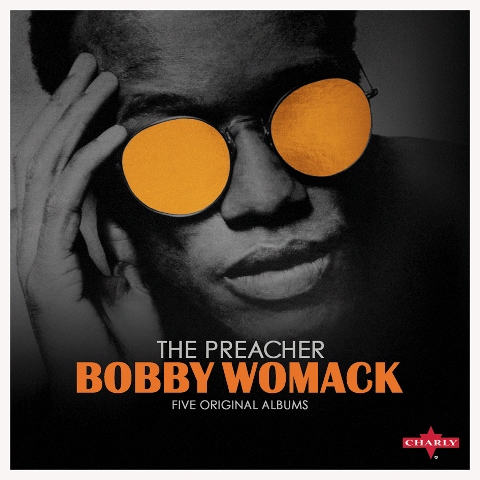
 Bobby Womack: The Preacher
Cover versions of standards like “Fly me to the Moon” and “I Left my Heart in San Francisco” were hardly going to make a mark with a hip – or, for that matter, any – audience in the late Sixties and early Seventies. Nor was reinterpreting The Beatles’ “And I Love her" and “Something”. Chuck in the adaptations of The Mamas and the Papas’ “California Dreamin’”, Jonathan King’s “Everyone’s Gone to the Moon”, Neil Diamond’s “Sweet Caroline” and Ray Stevens’s trite bubblegum-gospel hit “Everything is Beautiful” which pepper the first five solo albums from Bobby Womack, who died in June 2014, and it becomes clear that any message about the identity of this artist was unclear.
Was he an all-rounder, trying to court the supper-club set? Was he positioning himself as the definitive interpreter of songs which had been endlessly round the houses? Or was he a blues and soul-based singer-songwriter whose own songs were meant to shine amongg the cover versions padding his albums out? Whatever Womack might have been trying to say, one thing is certain from The Preacher – he had a musical identity crisis.
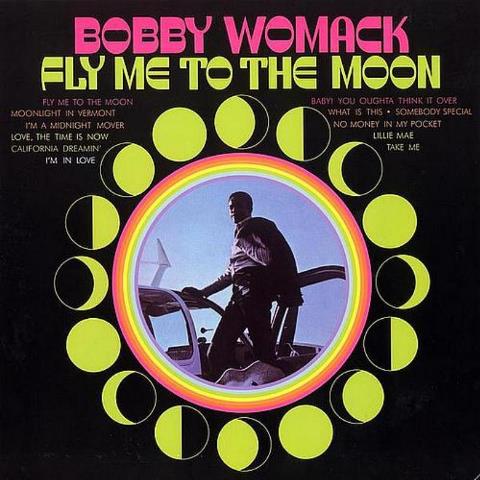 The Preacher is a clam-shell box collecting Womack’s first five solo albums: Fly me to the Moon (1968), My Prescription (1969), The Womack “Live” (1970), Communication (1971) and Understanding (1972). Each comes in a card repro of the original album cover. The accompanying booklet has a cluttered, over-busy design and straightforward liner notes. The new remastering is crisp and reveals a brittle, somewhat harsh, top-end, especially on Fly me to the Moon where the drums sound metallic. Womack has been depicted with what seem to be a couple of oranges obscuring his eyes in the cover image.
In the run-up to the release of Fly me to the Moon, Womack was effectively yesterday’s man. He had written classics like The Rolling Stones-covered "It's all Over Now", fronted The Valentinos and was Sam Cooke’s protégé. After Cooke’s murder in 1964, Womack married his widow. It was a move which led him to be ostracised by the music business and work in the shadows as a session guitarist, songwriter and in Ray Charles’s backing band. That changed when Wilson Pickett recorded strong-selling versions of his songs "I'm a Midnight Mover" and "I'm in Love". Both went on to feature on Fly me to the Moon. Thanks to attention Pickett brought his way, Womack was now viable as a solo artist.
Womack was also helped by producer Chips Moman, whose American Studio in Memphis had become his working base as a session guitarist. Fly me to the Moon and My Prescription were completed at American, while Communication was recorded at Muscle Shoals. Understanding included tracks taped at both studios. The live album, The Womack “Live”, was recorded in Hollywood.
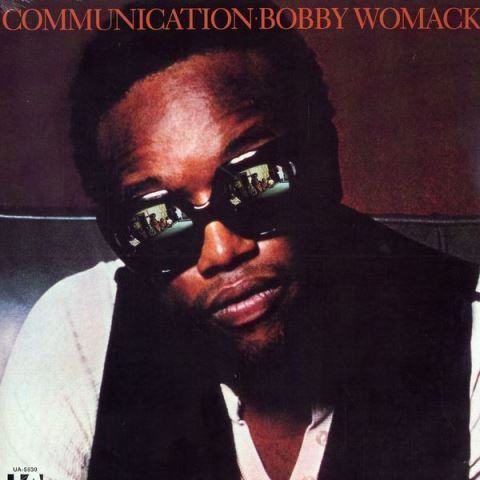 This was a commercially fertile period for Womack. The formula of setting originals alongside unlikely covers worked. Not only was he regularly releasing albums which figured on the R&B and jazz charts, but the singles extracted from them did so too. In 1972, Communication’s “That’s the Way I Feel About ‘Cha’” made the mainstream US chart. He was now established as a solo artist.
But the fact remains that for every tough, blues-tinged, southern soul-style gem – and loads are heard here – which he wrote himself, the cover versions are a distraction (although Communication’s Isaac Hayes-influenced take on "(They Long to be) Close to You" is interesting). They are no arbiter of artistic excellence. No matter the amount of effort he put into James Taylor’s “Fire and Rain”, on Communication, it remains a musical footnote.
Now, of course, the narrative about late-Sixties and later Womack centres around his difficult path through excess, the terrible tragedies of his life, his famous friends, the artistic high-point of 1981’s The Poet album and his subsequent work with Mos Def and Damon Albarn. Listening to the often frustrating albums collected in The Preacher shows that, musically, little about his early solo career was simple either. At a bargain £13.99, this box set is a handy primer in how Bobby Womack never took the easy road.











Add comment